
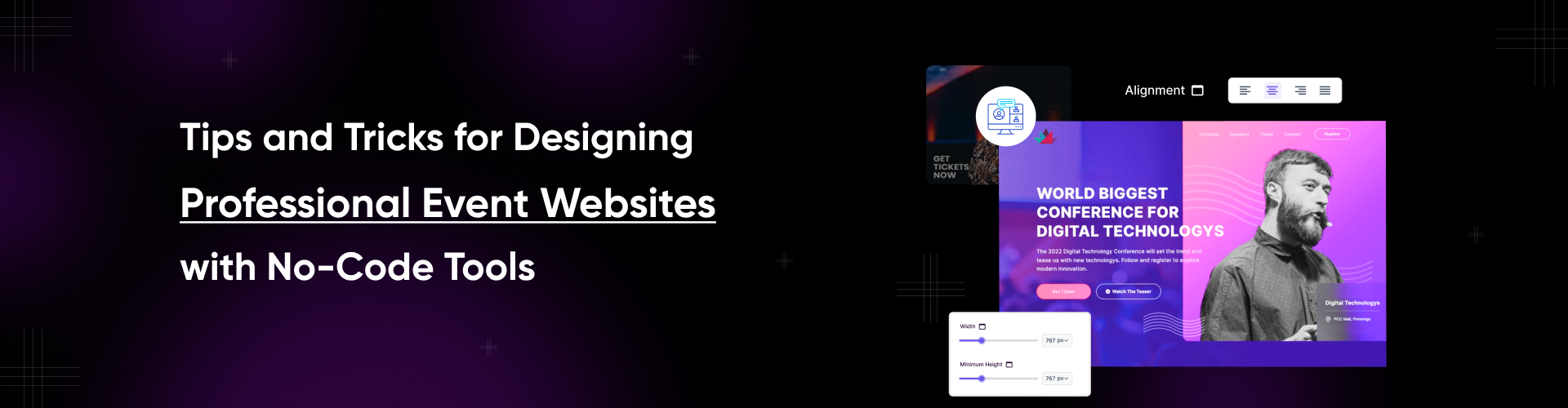
Nowadays, when you Google event management companies, a number of companies are available to offer their service at an affordable price. Consider yourself as a potential customer, what factors will you consider other than their services and pricing before choosing the right one? Is it the website’s design, photo gallery, or credibility? There is no doubt that these are some of the major factors that psychologically assist a customer in making decisions.
In today's digital age, having a professional and visually appealing website is crucial for event management. However, creating a website traditionally using coding can be time-consuming, complex, and requires technical expertise. Fortunately, with the development of no-code tools, event organizers now have the flexibility to design stunning websites without writing a single line of code. In this article, we will explore various tips and tricks for designing professional event websites using the no-code tools of Dotcom. We will delve into the benefits of using a no-code website builder and also discuss the challenges faced by event managers when relying on traditional coding methods.
Challenges Faced by Event Managers in Traditional Coding
As an event manager, creating a website is a huge decision and there are no second guesses on the type of obstacles you must face while trying to design a website using the traditional coding method. Here is a rundown of some of the most prominent obstacles.
Skill Requirements
Traditional coding methods require a deep understanding of programming languages and web development concepts. Event managers without coding experience often face challenges in creating and maintaining websites. Hence, they are often at a disadvantage while creating websites within the designated budget.
Time-Consuming Process
Coding a website from scratch involves writing, testing, and debugging code, which can be a time-consuming process. Event managers may not have the luxury of spending excessive time on website development when there are other aspects of event management to focus on. They may have a number of events on the schedule and leads to reach out to in the pipeline. Hence, it is challenging to offer time for website designing.
Limited Flexibility
Making changes or updates to a traditionally coded website often requires coding knowledge or reliance on developers. This lack of flexibility can slow down the iteration process and make it challenging to adapt to evolving event requirements or last-minute changes. Hence, a small error or bug can cause a huge disruption to the operation of your website. Imagine, it is the peak season and your website is unable to manage the load. That is definitely a red flag where you require the expertise of developers instantly.
Higher Cost and Dependency
Hiring professional developers or outsourcing website development can be expensive, especially for small-scale events. Relying on developers for ongoing website maintenance and updates can create dependence and additional costs for event managers. Unless there are sufficient funds, it becomes tedious for the event managers to take care of everything.
Start Creating Your Website Now
Benefits Of No-Code Website Builders For Event Websites

The best solution to overcome the above hurdles is to have a no-code web builder in place. The advantages of no-code web builders are tremendous. However, as an event management company, you have to understand your necessities and choose the right no-code website builder. In this section, we have explained the benefits of no-code web builders like Dotcom.
Time and Cost Efficiency
No-code tools offer a faster development process, eliminating the need for extensive coding and testing. Along with saving valuable time, they also reduce the costs associated with hiring developers or outsourcing web development tasks.
User-Friendly Interface
No-code tools typically have intuitive interfaces that allow event managers to easily design and customize their websites. They provide drag-and-drop functionality , pre-designed components, and widgets that streamline the design process.
Flexibility and Customization
No-code tools offer a wide range of customization options which allows event managers to create unique and tailored websites. Right from choosing color schemes and fonts to arranging layouts and sections, these tools provide flexibility to match the branding and theme of the event.
Seamless Integration
No-code tools often offer integration capabilities with popular platforms such as social media, email marketing tools, ticketing platforms, and CRM software. This enables event organizers to connect their websites seamlessly with other event management tools and services.
Selecting the Right No-Code Tool for Event Websites
The process of choosing the right no-code tool is very crucial. Conduct thorough research to explore the available no-code tools for website building . Consider factors such as user reviews, features, pricing, and customer support to find the tool that best fits your specific needs.
User Interface and Ease of Use
Search for no-code tools that have user-friendly interfaces, with drag-and-drop functionality and intuitive design features. Test out the tool's user experience before committing to ensure it aligns with your skill level and requirements.
Pre-Designed Components
Pre-designed components provided by no-code tools can significantly speed up the website design process. Look for tools that offer a wide variety of customizable components to match your event's theme and style.
Integration Capabilities
Consider the integration capabilities of the no-code tool. Determine whether it can seamlessly integrate with other platforms or services you plan to use for event management, such as payment gateways, or email marketing tools.
Planning and Structuring Your Event Website

The primary task starts with planning and structuring your website. We recommend the series of steps mentioned below for an efficient website-building process.
Define the Goals of Your Website
Identify the purpose and goals of your event website. Determine whether it's primarily for providing information, generating registrations, booking, or showcasing sponsors and speakers. This will guide the overall structure and content of your website.
Determine the Target Audience and User Experience
Understand your target audience and design your website to cater to their needs. Consider factors such as age demographics, technical proficiency, and event preferences when creating the user experience. Ensure your website is easy to navigate, intuitive, and visually appealing.
Create an Intuitive Website Navigation
Design a clear and intuitive navigation menu to help visitors easily find the information they are looking for. Organize your website's content into logical sections and ensure that important pages are easily accessible from the main navigation menu.
Organize and Present Event Information Effectively
Present event information in a clear and organized manner. Use headings, subheadings, and bullet points to break down information into digestible sections. Highlight key details such as event dates, venue, agenda, and speaker profiles to attract and engage visitors.
Focus on Mobile Responsiveness
It is essential to ensure your event website is fully responsive and optimized for mobile viewing. Test your website on different devices and screen sizes to ensure a seamless experience for mobile users.
Designing Engaging Event Websites

Once you are clear with the purpose and goals of your website, the next step is to start designing your website.
Choose an Appropriate Color Palette
Select a color palette that aligns with your event's branding and creates a visually appealing website. Ensure that the chosen colors complement each other and provide good readability. Similarly, choose typography that matches the tone and style of your event.
Utilize High-Quality Imagery and Videos
Incorporate high-quality images and videos that effectively represent your event and its key aspects. Use captivating visuals to create a positive first impression and engage visitors. Ensure that the media files are optimized for web use to prevent slow loading times.
Implement Consistent Branding Elements
Maintain consistency in your website's branding elements such as logo placement, color schemes, and fonts. Consistent branding reinforces your event's identity and professionalism. Use no-code tools that allow easy customization of these elements across all pages.
Highlight Key Event Features and Benefits
Showcase the unique features and benefits of your event prominently on the website. This may include special speakers, interactive sessions, networking opportunities, or exclusive perks. Highlighting these aspects will generate interest and encourage visitors to register or buy tickets.
Leveraging Interactive Features and Functionality

Integrate registration and booking forms directly into your event website using no-code tools. This will allow visitors to conveniently register or buy tickets without leaving the website. Customize the forms to capture relevant attendee information and provide a seamless registration process.
Include Social Media Integration and Sharing Options
Incorporate social media integration into your event website. Add social sharing buttons to make it easy for visitors to share your event with their network. Display social media feeds or testimonials to build credibility and engage with potential attendees.
Integrate Maps Venue Location
Provide detailed information about the event venue, including maps and directions. Use no-code tools that allow you to embed interactive maps or integrate with location-based services. This helps attendees easily navigate to the venue and reduces the chance of confusion or delays.
Incorporate Interactive Event Schedules and Agendas
Display event schedules and agendas in an interactive and visually appealing manner. Use no-code tools to create timelines, calendars, or grids that allow attendees to explore sessions, speakers, and activities. Enable filtering and search options to help attendees find relevant information easily.
Optimization and Performance

The process of optimization of a website is never-ending. Instead, it is a best practice to periodically optimize your website and analyze its performance.
Optimize Website Loading Speed
Optimize your event website for fast loading times. Compress images, minify code, and leverage caching techniques to reduce page load times. No-code tools often come with built-in optimization features to help you achieve optimal website performance.
Ensure Compatibility
Test your event website on various web browsers and devices to ensure it renders correctly and functions seamlessly. No-code tools typically offer responsive design capabilities, making it easier to achieve cross-device compatibility.
Implement SEO Best Practices
Optimize your event website for search engines to improve its visibility and organic reach. Use relevant keywords, optimize meta tags, and create unique and engaging content. Leverage no-code tools that offer SEO-friendly features or integrations with SEO plugins.
Test and Debug Your Website Regularly
Regularly test and debug your event website to identify and fix any issues or errors. No-code tools simplify this process by providing debugging features and preview options. Ensure that all links, forms, and interactive elements are functioning correctly.
Conclusion
No-code tools have revolutionized the way event managers create professional websites. They provide an accessible platform for designing visually appealing and engaging event websites without the need for coding knowledge. By following the tips and tricks outlined in this article, event organizers can create websites that capture attention, drive registrations, and enhance the overall attendee experience. No-code tools like Dotcom offer an efficient and flexible alternative. Embracing these tools empowers event managers to take full control of their websites, save valuable resources, and create impactful online experiences for their audience.
